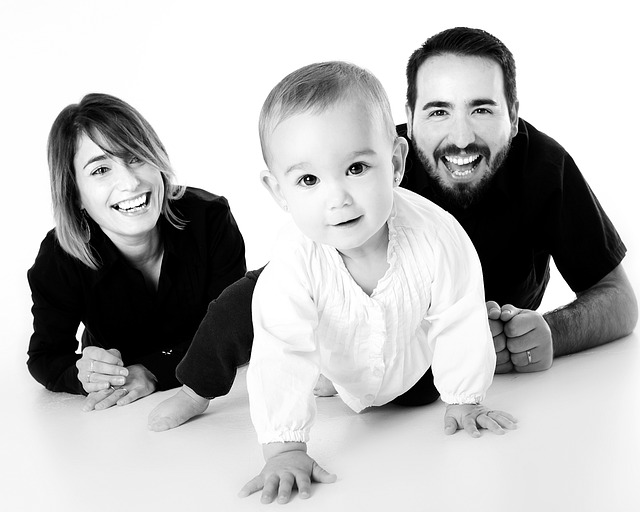
 The miracle of life begins at the moment of a child’s conception and continues with the birth of our child and the feelings of happiness, pride, and wonder that overwhelm us.
From the moment they are born, an emotional bond with our child develops that drives us to give them all our care, love, and affection. Who has not heard, time and again, of a mother’s instinctive and selfless love for her child!
British psychologist Bowlby was the first to refer to this relationship as an “attachment bond” in his Attachment Theory, which he developed in 1969. It is an innate emotional connection that develops between the infant and the people who care for them from birth, and it is linked to neurobiological structures in our brain. It is bidirectional and mutual, as parents “bond” with their babies and babies “bond” with their parents.
During the 1970s, research conducted by psychologist Ainsworth with infants and young children demonstrated the importance of the quality of the emotional bond. Her studies showed that children who experience less anxiety from infancy develop a secure attachment with their parents precisely because the parents respond promptly to their children’s needs.
What does this mean? The relationship we build with our child accompanies them throughout their life. It provides them, from a very early age, the foundation upon which they will build their sense of self. It helps them develop self-esteem, teaches them to love, regulate their emotions, form healthy relationships as adults, develop resilience in the face of difficulties, solve problems, take initiative, and overcome adverse situations and stresses more easily.
In the opposite case, where a child experiences continuous, prolonged, and intense anxiety from a very young age in their relationship with their parents, they develop an insecure attachment. As they grow up, they will develop insecurities, have low self-esteem, experience life’s difficulties with great disappointment, struggle to solve problems and form healthy relationships, and feel the need to rely on others.
What are these needs of the child, and how can I respond? From the very first moment, infants learn through their experiences with us. Older children can also communicate through speech. Therefore, as important as it is to respond to their every biological need, it is equally important for our children that we show them at every moment the feelings of love, affection, and care we feel for them, starting from infancy. Why withhold what we truly feel?
The infant seeks eye contact with their parents. By looking our child in the eyes, we send powerful messages of safety and love. Through our facial expressions and gaze, our child receives the first information about emotions and learns from the earliest days to respond to them, even to imitate them.
The infant has not yet developed language, and the only way to communicate their needs to us—to tell us “I’m hungry,” “I’m in pain,” “I feel lonely”—is through crying. Every time we respond to our child’s crying with care and love, their sense of security increases, and our child learns that they can trust us.
Our child needs our warm embrace to calm them, help them relax, and feel safety, love, and comfort. Through our embrace, we can offer them our tender touch. Both hugging and touching influence our child’s immune system as antibodies develop.
Let us speak to them warmly and respond to their sounds and smiles. Our child’s smiles always capture our attention. Our babies tell us how joyful and happy they feel with us. They also invite us to communicate with them, to smile back, and to talk to them. When we respond to their smiles, they relax and express feelings of happiness. This is how they learn to trust their emotions.
Today, neuroscience provides evidence of the importance of the quality of connection with our children, as it is directly recorded at a neurobiological level in our child’s brain from infancy. It shapes the areas of the brain in the prefrontal cortex (the social brain) that are associated with emotional regulation, attention to social cues, and empathy.
The more positive stimuli infants experience, the more they develop their social brain and, consequently, the traits we mentioned earlier in the context of secure attachment.
From the first months after birth, connections are formed between nerve cells (synapses) in the brain that reflect the child’s emotional experiences with us. During the second and third years, any connections that are not used are lost. This means that if a child grows up in an environment with negative stimuli, their brain will retain the connections corresponding to our negative behaviors.
It has been observed that in infants experiencing prolonged stress, the stress response system is activated, and cortisol levels in their blood increase. Babies, and even older preschool children, lack the experience to protect themselves from stress and rely on us to help them calm down and feel safe. Chronic stress damages this system and makes it difficult for them to develop positive feelings about themselves.
In general, criticism, anger, shouting, belittling, contradictory emotions, and withholding communication of our feelings toward the child will hinder their emotional development. The recipe for raising emotionally healthy children is to generously show them the love we feel for them.
Let us show our children from infancy all the love and beautiful emotions we feel for them. Let us provide them with a beautiful emotional environment that will help them unfold all aspects of their personality and abilities, so that as adults they may possess self-esteem, self-awareness, and empathy.
Evangelos Kandounakis
Psychologist - Psychotherapist
(I wrote this article back in October 2015 and was published in the newspaper "Χανιώτικα Νέα" ("Chaniotika Nea") on 7 October 2015. You can also access it at: https://www.haniotika-nea.gr/pedi-ke-gonis-i-agapi-mas-voithai-ti-sinesthimatiki-anaptixi-tou-pediou-mas/)